Wise Complete Guide for Japan 2026 — How to Sign Up, Use the Card, and Save on Every Yen
⚡ 30-Second Answer: Wise gives you roughly the mid-market rate −0.5% (its published conversion fee) — far better than airport counters (~mid −3 to −6%) or bank windows (~mid −2 to −3%). The debit card costs a one-time ¥1,200 to issue, ¥0 annual fee, and arrives by mail in roughly 7-14 days. In Japan you pull yen from any 7-Eleven / Lawson / FamilyMart ATM, 24/7, or tap to pay with Apple Pay / Google Pay. On a typical ¥100,000 exchange you keep meaningfully more than at the airport — often several thousand yen. Order it 2-3 weeks before your flight. (Rates are indicative and move daily; only World Currency Shop is live-tracked on this site — check the live rate before you exchange.)
Quick Reference
Value
Wise effective rate
~mid-market −0.5% (published fee)
Card issue fee
¥1,200 one-time (¥0/year)
Card delivery time
~7-14 days by mail
Where it works
Konbini ATMs 24/7 + tap-to-pay
Savings on ¥100,000
several thousand yen vs airport
Last verified
June 2026
📖10 min read
Photo: Yen Finder Editorial
SponsoredThis article contains affiliate links. We may earn a commission when you sign up through them, but our recommendations and editorial stance are not influenced by the partnerships.
Contents📖 ~11 min read
If you're searching "how to use Wise" or "Wise card Japan," you've already done the hard part — you know the airport kiosk is robbing you. This guide takes you from zero to a working card in your pocket: what Wise is, exactly how much it saves with real yen figures, every signup step, how to withdraw at a Japanese convenience store, the fees nobody hides here, and the mistakes that catch first-timers.
💡 Why trust this page: We list every Wise fee, including the ¥1,200 card cost — no "100% free" hype. The whole point of Wise is honest, predictable pricing, so this guide is too.
What is Wise?
Wise (formerly TransferWise) is a money-transfer and multi-currency-card company founded in the UK in 2011, now headquartered in Singapore, with over 16 million customers worldwide. It is regulated in every market it operates in — including by Japan's Kanto Local Finance Bureau, the UK's FCA, Singapore's MAS, and FinCEN in the US.
The reason travelers love it is one number: the mid-market rate. That's the "real" exchange rate you see on Google or Reuters — the midpoint between buy and sell, with no markup baked in. Wise gives you that rate and charges a small, transparent conversion fee on top (typically 0.43-0.5%). Compare that to:
Airport exchange counters: roughly mid-market −3 to −6%
Bank windows (megabanks): roughly mid-market −2 to −3% once the per-transaction fee is included
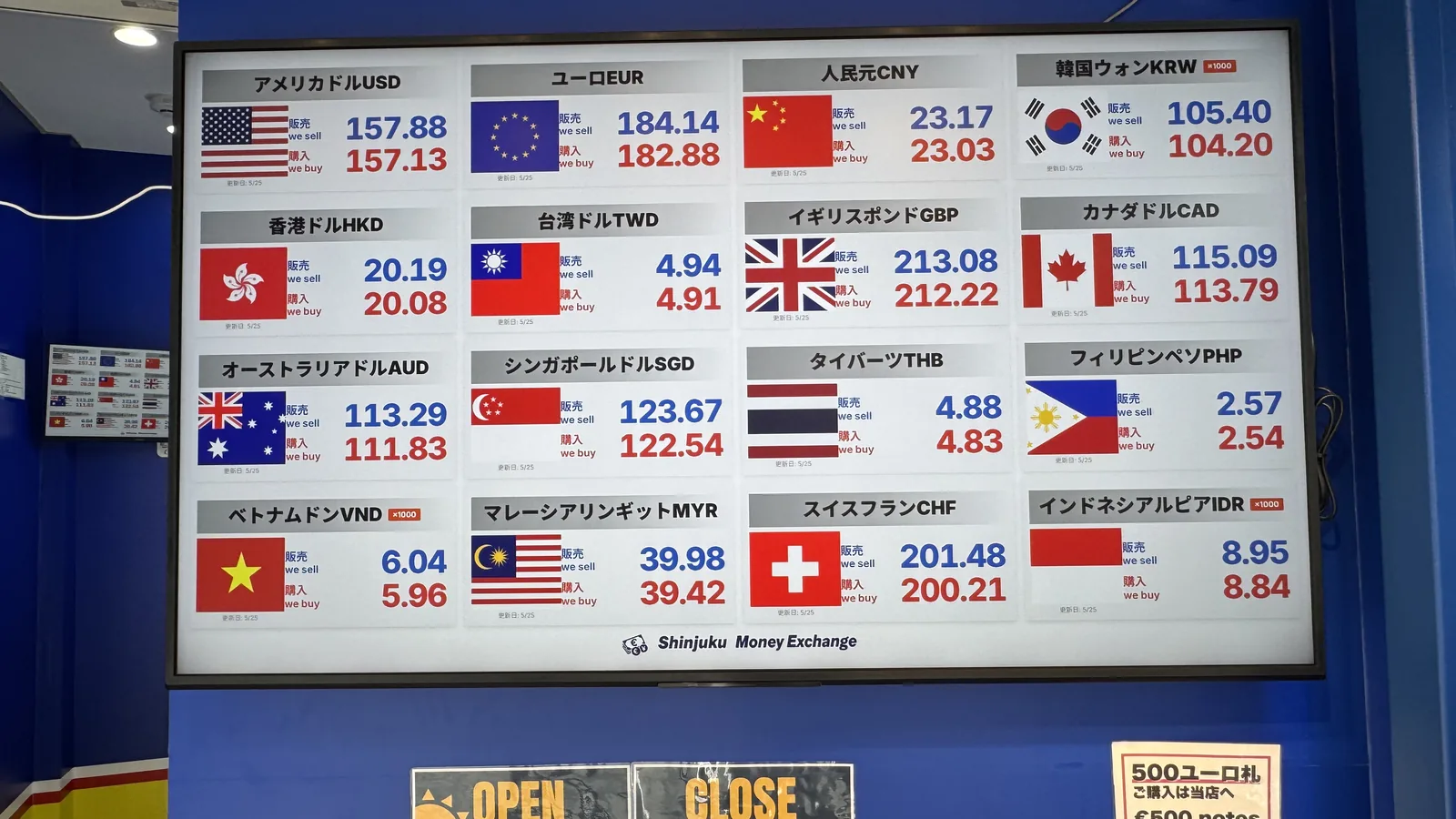
Downtown specialist counters (e.g. World Currency Shop): roughly mid-market −1 to −2.5%, varying by shop and day
Hotel front desks: roughly mid-market −4 to −7%
So Wise isn't "a bit cheaper." For most travelers it's clearly cheaper than the counter and machine options they default to.
You also get a multi-currency account (hold 40+ currencies in one app), a debit card that works at ATMs and shops worldwide, and the ability to send money home at the same low rates.
Wise vs cash exchange vs bank — the real cost
Here's roughly what each option costs on two common amounts, expressed as a spread off the mid-market rate. Spreads are indicative, move daily, and vary by shop — only World Currency Shop is live-tracked on this site, so check the live rate before you exchange. Wise's −0.5% is its own published conversion fee; the others are typical ranges.
Exchanging the equivalent of ¥30,000
Method
Typical spread off mid-market
Wise debit
~−0.5% (published fee)
Seven Bank ATM + Wise
~−0.5% + ¥220 ATM fee
Downtown specialist counter
~−1 to −2.5%
Megabank window (USD)
~−2 to −3% incl. per-transaction fee
Airport counter
~−3 to −6%
Exchanging the equivalent of ¥100,000
Method
Typical spread off mid-market
Wise debit
~−0.5% (published fee)
Seven Bank ATM + Wise
~−0.5% + ¥220 ATM fee
Downtown specialist counter
~−1 to −2.5%
Megabank window (USD)
~−2 to −3% incl. per-transaction fee
Airport counter
~−3 to −6%
On ¥100,000, Wise typically beats the airport by several thousand yen — and the bigger the amount, the bigger the gap, since Wise's spread stays near −0.5% while counter and airport spreads scale with the amount.
💳 Save several thousand yen on a ¥100,000 exchange — open a free Wise account → and order the card before you fly. The mid-market rate is the same one you see on Google, minus a transparent ~0.5%.
How to sign up for Wise (step by step)
Total active time is about 15 minutes; the physical card then arrives in ~7-14 days. Do this 2-3 weeks before departure so the card reaches you in time.
Step 1 — Create your account
Go to wise.com or download the app (iOS / Android). Enter your email and a password, choose your country of residence, and verify the email with the code Wise sends. This takes about 2 minutes.
Step 2 — Verify your identity
Wise is regulated, so it must confirm who you are. In the app you'll photograph your passport or national ID and take a quick selfie / liveness check. Approval is usually minutes to a few hours, occasionally up to a day. Tourists and non-residents can complete this — you don't need a Japanese bank account or residency to be verified.
Step 3 — Order the debit card
Once verified, go to Card → Order a card. The Wise debit card has a one-time issue fee of about ¥1,200 and no annual fee. Enter your mailing address carefully — include your building name and room number in clear Latin characters, because the card ships by post and a wrong address is the #1 cause of delivery trouble.
Step 4 — Top up (add money)
Add funds by bank transfer or by debit/credit card. Bank transfer is cheapest; card top-up is instant but may carry a small fee. You can hold yen directly, or hold your home currency and let Wise convert at the mid-market rate the moment you spend. For Japan, topping up and converting to JPY in advance locks in a known rate.
Step 5 — The card arrives
The physical card reaches a Japanese address in roughly 7-14 days. Activate it in the app, then add it to Apple Pay or Google Pay so you can tap to pay immediately. You can also use the virtual card for online purchases before the plastic arrives.
✅ Done? Lock in your rate now. Once verified, order your Wise card → and top up — the card mails in ~7-14 days, so the earlier you do this, the calmer your departure.
How to use Wise in Japan
Withdraw yen at a konbini ATM (24/7)
Japan has ~27,000 Seven Bank ATMs in 7-Eleven stores, plus Lawson and FamilyMart (E-net) machines — all of which accept foreign-issued cards and run 24 hours.
Open the Wise app and check your JPY balance.
Insert your Wise debit card into the ATM.
Choose English (Chinese, Korean, Thai and more are available).
Select Withdrawal → Savings/Checking.
Crucial: if asked "withdraw in JPY or your home currency?", always choose JPY. Picking your home currency triggers DCC — a hidden 3-7% markup.
Take your cash and card.
Wise's ATM free allowance covers roughly ¥30,000 (about $100) per month; beyond that there's a small fee (around 1.75%) plus the ATM's own ¥110-220 charge. So withdraw in larger, less frequent chunks rather than ¥3,000 at a time.
Tap to pay at stores
Add the card to Apple Pay / Google Pay and you can tap at convenience stores, big chains, department stores, and most restaurants in cities. The app shows the mid-market rate before you pay, so there are no surprises. Note: small local eateries, rural shops, and shrine/temple offices are often cash only — keep ¥10,000-30,000 in physical yen as backup.
Check the rate before you spend
Open the app any time to see the live mid-market rate for your currency pair. Because Wise pegs to that rate, what you see is what you pay — there's no separate "card rate" markup like a bank tacks on.
Fees explained honestly
No hidden costs here — this is the full list:
Conversion fee: ~0.43-0.5% for major currencies (USD ~0.41%, EUR ~0.43%; some currencies like CNY are higher). This is on top of the true mid-market rate.
Card issue fee: ¥1,200, one time only. No annual or monthly fee.
ATM withdrawals: free up to ~¥30,000/month, then ~1.75% on the excess, plus the machine's ¥110-220 fee.
Holding money: free. No minimum balance, no maintenance fee.
Top-up by bank transfer: free; by card: a small percentage may apply.
That's it. Predictable and printed in the app before every transaction — which is exactly why it converts skeptical travelers better than any "free!" banner would.
Wise vs Revolut — the quick verdict
Both are excellent. The short version:
Choose Wise if you'll exchange more than ¥75,000-100,000, want to use it on weekends, hold multiple currencies, or send money. Wise is a flat mid-market −0.5% with no weekend surprises.
Choose Revolut for short trips under ¥75,000 on weekdays, where its free allowance can mean 0% markup.
Best of all: carry both. Wise for big exchanges and ATM withdrawals, Revolut for small weekday tap payments. Both have ¥0 annual fees.
Trying to sign up after you land. The card takes ~7-14 days to arrive. Order it 2-3 weeks before the trip.
Choosing DCC at the ATM or card terminal. Always pick JPY ("local currency"), never "your home currency" — DCC adds 3-7%.
Holding the wrong currency when you spend. If your balance is in USD and you don't pre-convert, Wise converts on the spot — fine, but pre-converting to JPY lets you lock a known rate and check it first.
Tiny, frequent ATM withdrawals. Each one eats into your ¥30,000/month free allowance and adds the ¥110 machine fee. Withdraw bigger amounts less often.
Entering a sloppy mailing address. Misspelled building names cause lost cards. Use clear Latin characters with room number.
Pre-departure checklist
☐ 3 weeks out: create Wise account, verify ID, order the card (¥1,200)
☐ 2 weeks out: top up by bank transfer, convert some balance to JPY
☐ Card arrives (~7-14 days): activate it, add to Apple Pay / Google Pay
☐ Before flying: test a small purchase, screenshot the app login
Q1. Is Wise safe?
A. Yes. Wise is regulated by Japan's Kanto Local Finance Bureau, the UK's FCA, Singapore's MAS, and FinCEN in the US, with over 16 million customers. Customer funds are held in safeguarded accounts at major banks, separate from Wise's own money. See Wise's security page.
Q2. How long does the card take to arrive?
A. Roughly 7-14 days by mail to a Japanese address. The virtual card works instantly for online and Apple Pay / Google Pay use while you wait.
Q3. Can tourists and short-term visitors get Wise?
A. Yes. You don't need Japanese residency or a local bank account. You'll verify with your passport and can top up from a card or overseas bank transfer.
Q4. What are the ATM limits?
A. About ¥30,000 (≈$100) free per month; beyond that, ~1.75% on the excess plus the machine's ¥110-220 fee. Withdraw in larger amounts to stay efficient.
Q5. What if I lose the card?
A. Freeze it instantly in the app with one tap, then order a replacement. Because you can freeze/unfreeze yourself, a lost card is far lower-risk than cash.
Q6. Wise vs my home bank's card — why bother?
A. Most bank cards charge a 2-3% foreign-transaction fee plus a worse exchange rate, and many won't work in Japanese ATMs at all. Wise gives the mid-market rate −0.5%, works in every konbini ATM, and shows the cost upfront.
Bottom line
For exchanging money in Japan, Wise is the highest-value setup most travelers can make — the mid-market rate minus a transparent 0.5%, a ¥1,200 card that pays for itself on your first ¥30,000 exchange, and 24/7 access at every convenience store. The only catch is timing: the card mails in 7-14 days.
Last verified June 11, 2026. Wise's fees and delivery times are updated periodically; confirm the latest figures on Wise's official site before signing up. Cost estimates use June 2026 reference rates and are illustrative.