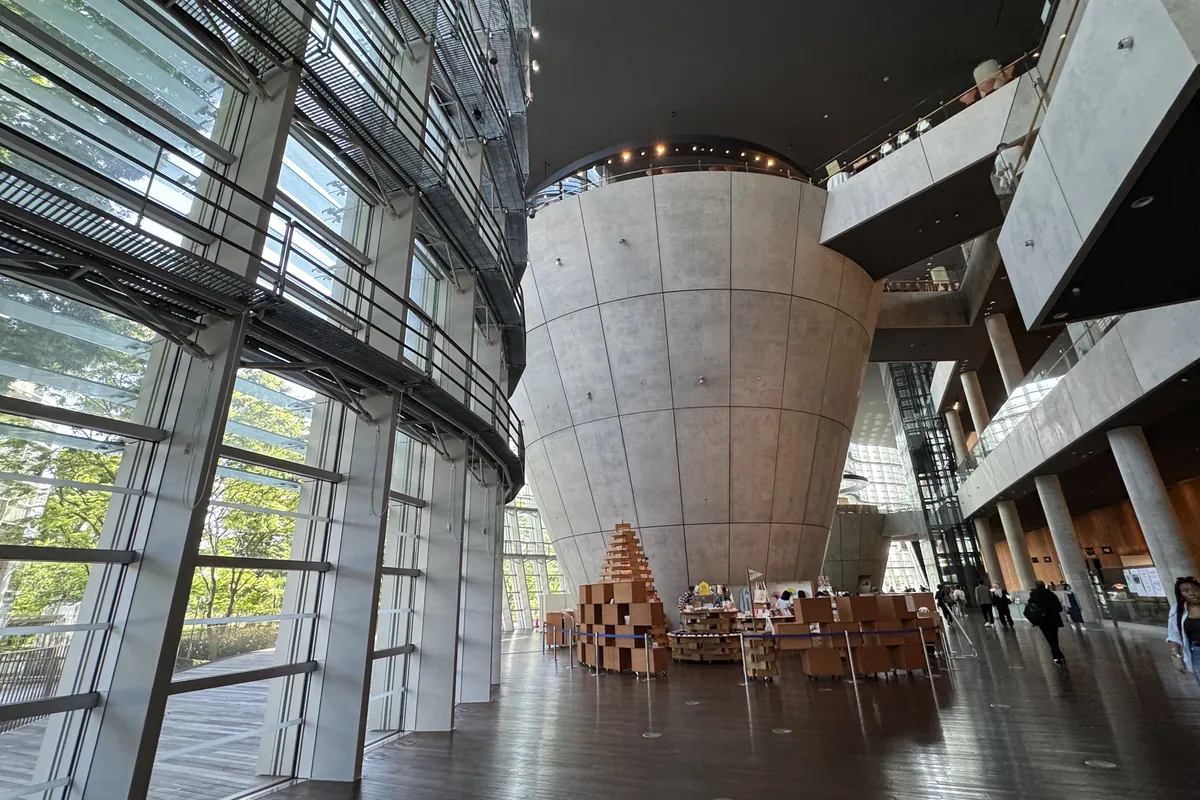
4. West Shinjuku + Cocoon Tower — Tocho observation deck is the ¥0 king of cost-performance
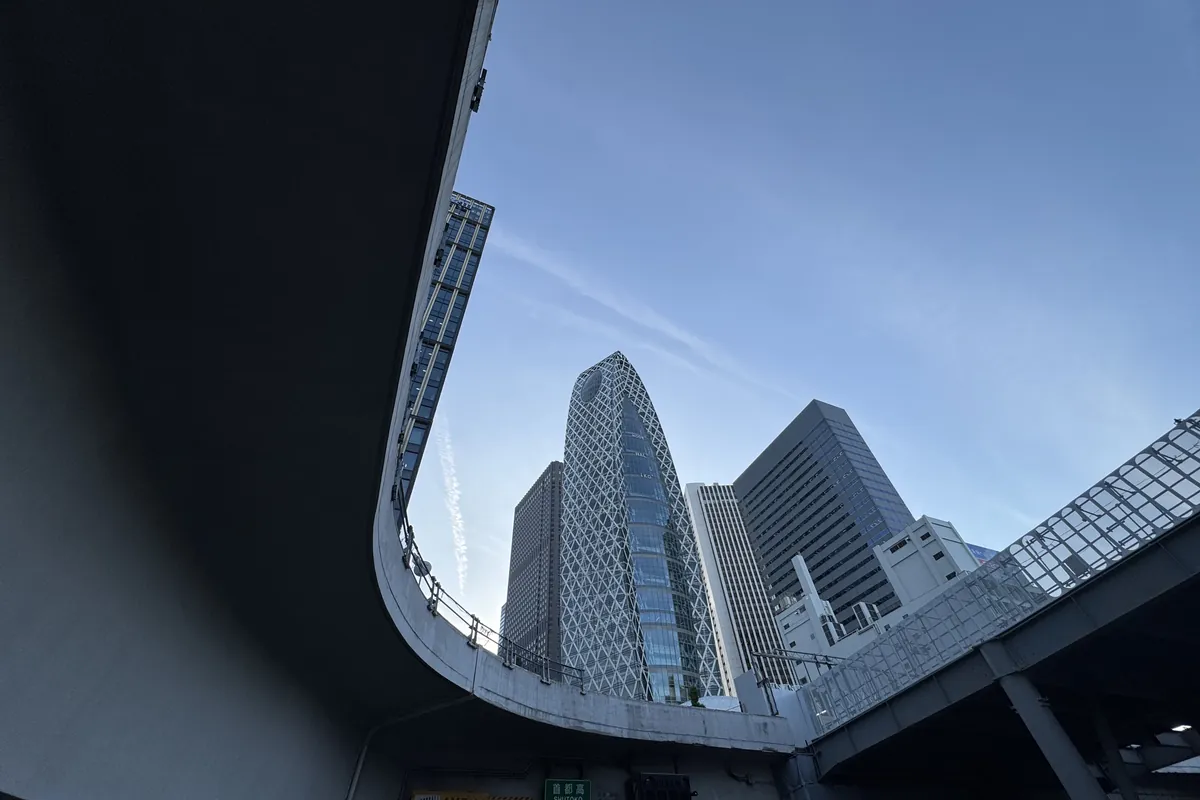
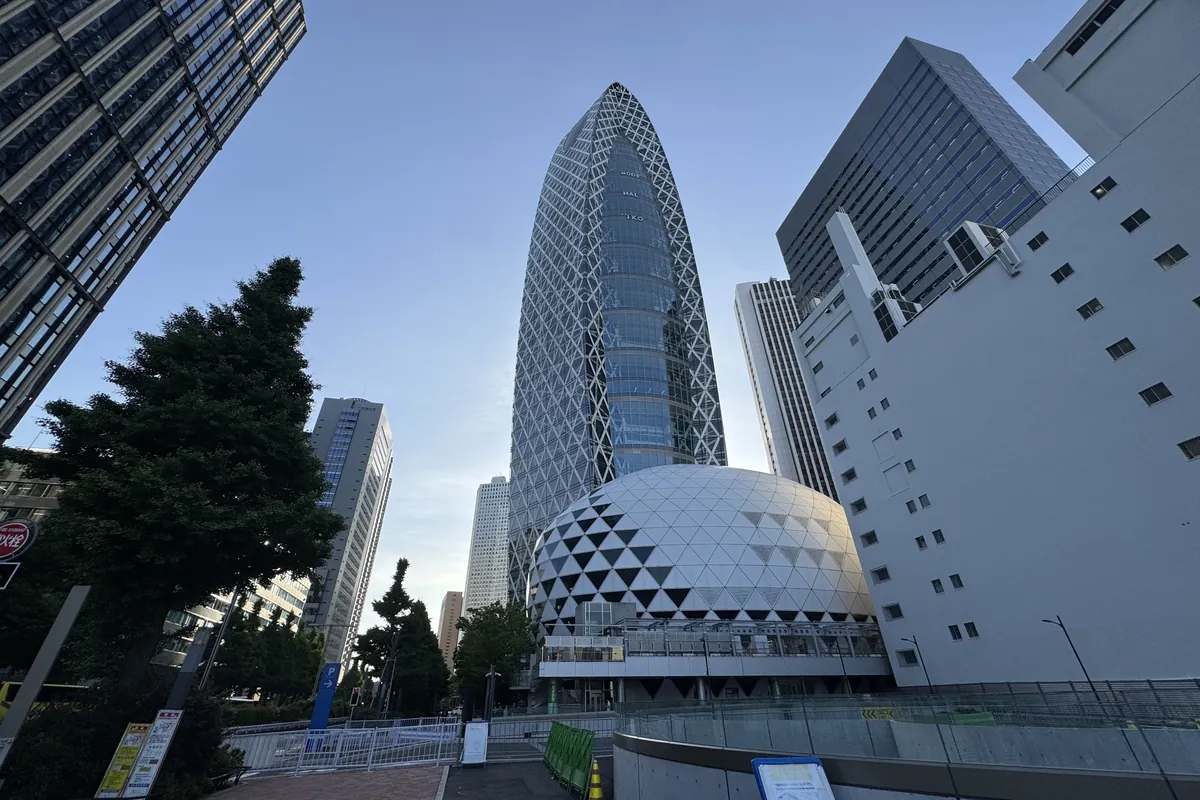
Shinjuku Mode Gakuen Cocoon Tower (204 m tall) is a vocational school building designed by Noritaka Tange (son of the late Kenzo Tange) and the firm Tange Associates (丹下都市建築設計). Completed in 2008, this cocoon-shaped supertall is the only one of its kind in the world and has won multiple international awards.
Money talk — almost everything here is ¥0
| Spot |
Price |
| Tokyo Metropolitan Government (Tocho) observation deck (45F, 202 m) |
¥0 (free!) |
| Cocoon Tower exterior photos |
¥0 |
| West Shinjuku skyline from Shinjuku Central Park |
¥0 |
| Lobbies of Keio Plaza, Hyatt, and others |
¥0 |
→ The Tocho observation deck is internationally rare: a 200 m-class free observation deck. You get the same night view as Mori Tower (¥1,800) or Tokyo Tower (¥1,500) for ¥0.
Tips for the Tocho observation deck
- Two decks: North and South. The North deck stays open until 23:00 on some days — best for night views
- Peak times (weekend evenings) may have entry limits; weekday evenings are smoother
- No need to buy anything — you can ride the elevator up with zero yen in your pocket
- Cocoon Tower has no observation deck (it's a vocational school, so public access is limited). Treat it as an exterior-photo spot only
Money strategy for West Shinjuku
The West Shinjuku formula is "see architecture for free, eat reasonably."
- Lunch: Restaurant arcade in the Tocho basement, lunch ¥1,000–1,500 (~$7–10)
- Coffee: Keio Plaza lobby lounge ¥800 (~$5) (with high-floor views)
- Night view: Tocho (free) → cocktails at Polestar on the 47F of Keio Plaza, ¥1,500–2,000 (~$10–13)
For about ¥3,500 (~$23) total, you get a West Shinjuku architecture tour, night view, and a pre-dinner drink all in one package.
5. Architecture + money strategy — how much for how many sites in one day?
Model course A: Completely free (¥0)
Even with zero sightseeing budget, you can enjoy 70% of Tokyo's modern architecture.
- Morning: Midtown Hinokicho Park + Galleria (¥0)
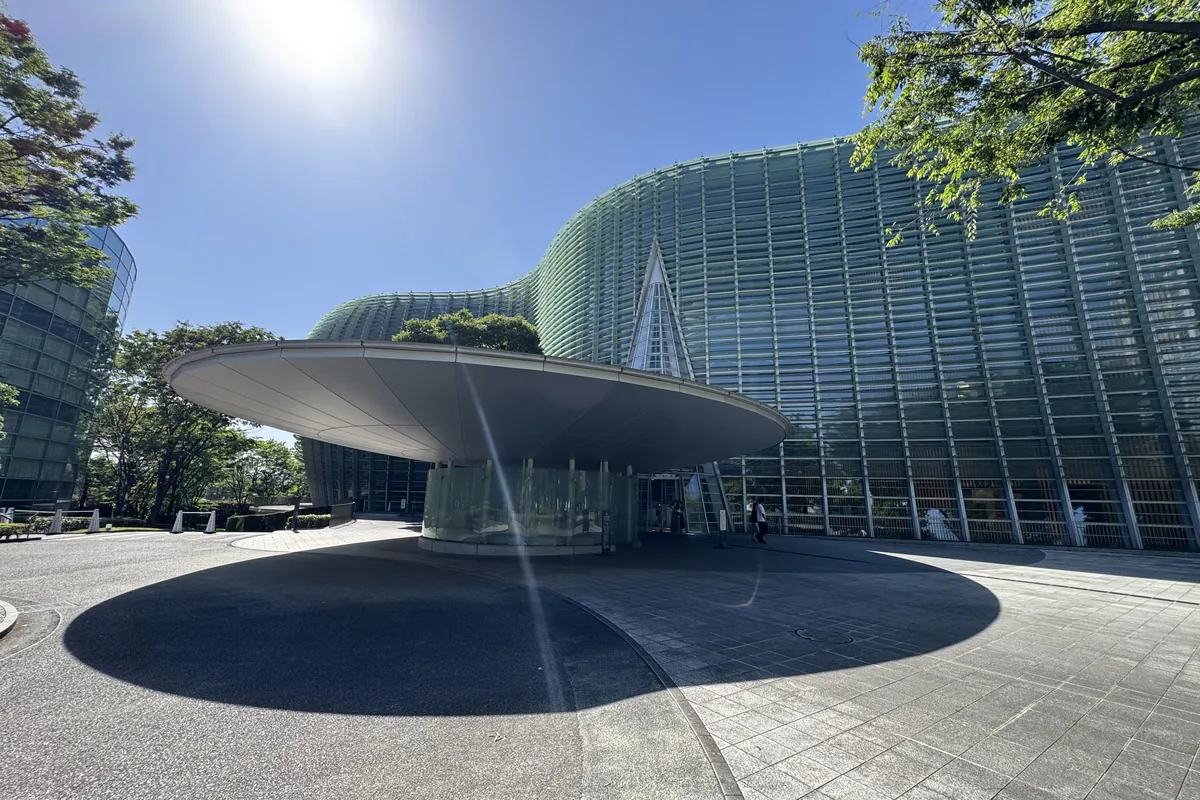
- Midday: Just walk through NACT's building (¥0)
- Late afternoon: Tocho observation deck for night view (¥0)
- Evening: Cocoon Tower exterior photos (¥0)
Total: ¥0 + ¥800 subway day pass = ¥800 (~$5)
Model course B: Standard (¥5,000)
The realistic version: "go inside two places, sit down for coffee once."
- Morning: Mori Art Museum + observation deck (¥1,800)
- Midday: NACT — coffee + dessert at Bocuse (¥2,000)
- Late afternoon: Tocho observation deck (¥0)
- Evening: Cocktail at a West Shinjuku lounge (¥1,500)
Total: ¥5,300 + ¥800 subway = ¥6,100 (~$41)
Model course C: Architecture full course (¥12,000)
Everything in: special exhibition + Bocuse lunch + Suntory Museum.
- Morning: Mori Art Museum + observation deck + Sky Deck (¥2,300)
- Midday: Bocuse full lunch course (¥5,000)
- Afternoon: Suntory Museum of Art (¥1,800)
- Late afternoon: 21_21 DESIGN SIGHT (¥1,400)
- Evening: Tocho observation deck + West Shinjuku cocktail (¥1,500)
Total: ¥12,000 + ¥800 subway = ¥12,800 (~$85)
Does the JR Pass help here?
→ In short, no — the JR Pass is not great for architecture-hopping. Roppongi (Hibiya Line / Oedo Line), West Shinjuku (Oedo Line / Toei), and NACT (Chiyoda Line) are all on subway lines outside the JR Pass coverage.
The cheapest options are the Tokyo Metro + Toei combined 1-day pass at ¥900 (~$6) or the Toei subway 1-day pass at ¥700 (~$5). Buy at any station's ticket machine — not at convenience stores or in apps.
6. Money-saving tips — 7 ways to cut your architecture budget
1. Early-morning observation decks are empty and photogenic
Tokyo City View at Mori Tower is emptiest right at the 10:00 opening. Empty = no glass reflections = better photos = more value for your ¥1,800.
2. Time your visit for "sunset + night view" with a single ticket
Check in 30 minutes before sunset, then stay 1–2 hours through the blue hour into full darkness. One ¥1,800 ticket buys you three different skies.
3. The Tocho observation deck is the best "free night view" anywhere
¥0 for a 200 m night skyline. A perfect free alternative to Mori Tower or Tokyo Tower, even on a zero-budget day.
4. Museum shops are free to enter
The shops at NACT, the Suntory Museum of Art, and the Mori Art Museum don't require admission. You can browse architecture and design books and pick up postcards (¥150–300, ~$1–2) as cheap souvenirs that double as architecture records.
5. Official-site or app pre-sales often save ¥100–200
For the Mori Art Museum and Suntory Museum of Art, pre-buy on the official site or via Klook / KKday. Usually ¥100–300 cheaper than the day-of window, and you skip the queue.
6. Hotel lounges let you "buy the view" with one cup of coffee
The lounges at Ritz-Carlton 45F, Keio Plaza 47F, and Park Hyatt 41F (Shinjuku) sell a high-floor window seat with one ¥1,200–1,500 coffee — sometimes cheaper than an observation deck ticket (¥1,800).
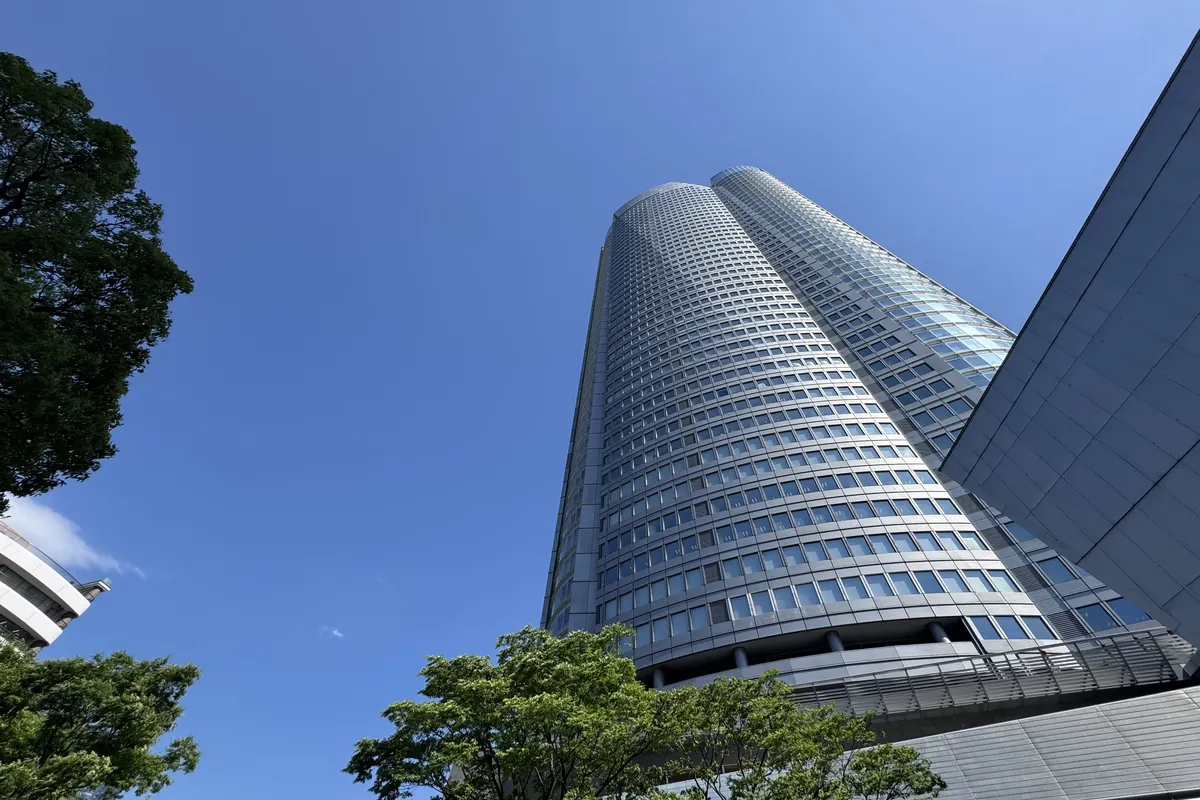
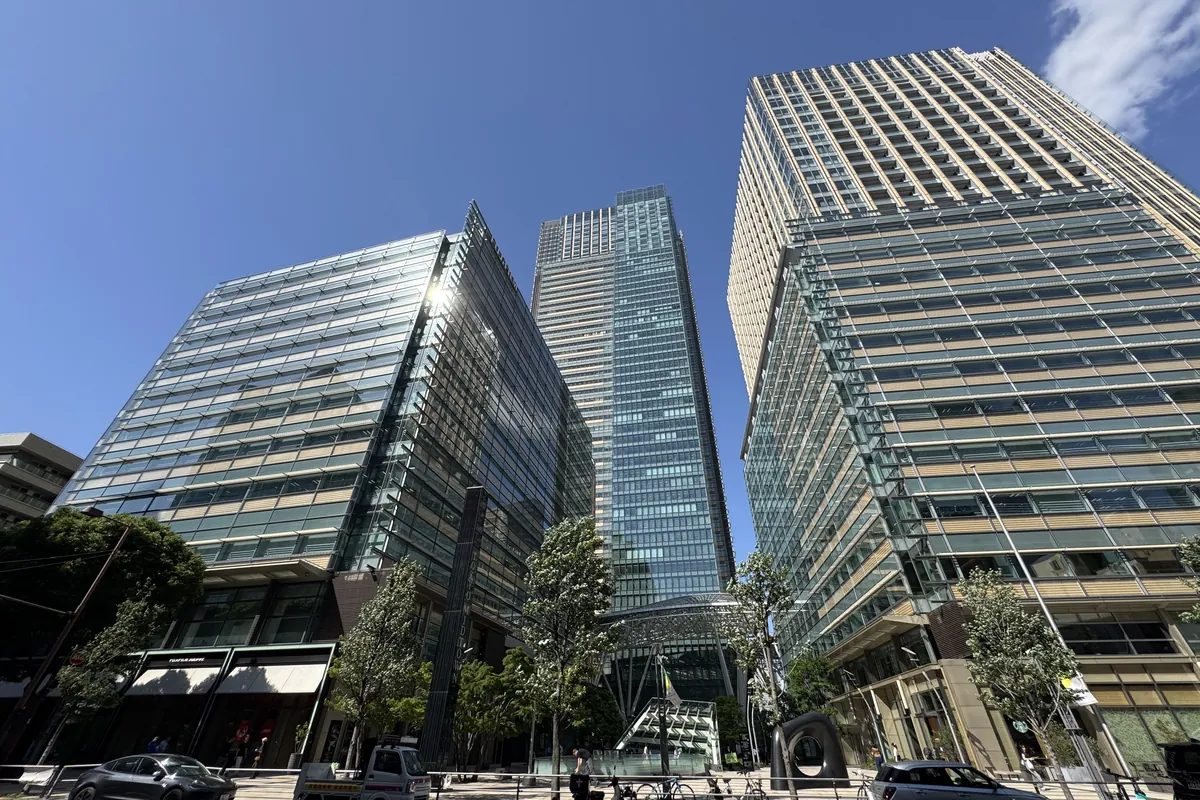
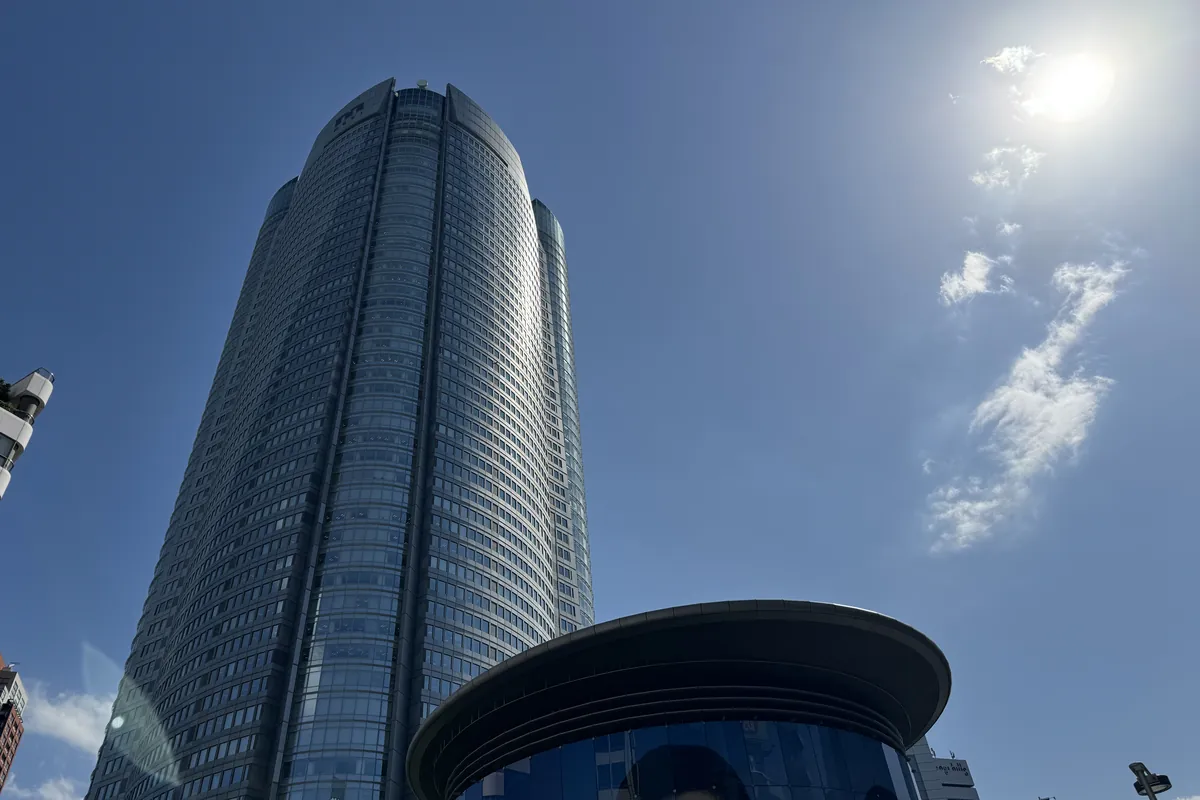
7. The best architecture photos are from outside, looking up
For Hills, Midtown, and Cocoon Tower, the straight-up shot from directly underneath gets the most social media engagement. Anyone can take it. For ¥0.
7. Frequently asked questions
Q. Is it realistic to see everything in one day?
A. Going inside all 5 sites in a single day is tough. If you're only doing exteriors, you can clear all 5 in a day. If you want to enjoy "observation deck + museum + café" properly, split it across two days. Day 1: Roppongi (Hills + Midtown + NACT). Day 2: West Shinjuku (Tocho + Cocoon).
Q. Is this kid-friendly?
A. Yes. The Mori Art Museum and NACT often offer free admission for junior high students and younger on special exhibitions, and the Tocho observation deck is completely free, so it's a low-cost family outing. Strollers fit easily in the observation deck elevators.
Q. Can I do everything with just a card?
A. Almost yes. Hills, Midtown, and NACT accept cards 100%, plus Apple Pay and Google Pay. The only cash you really need is for subway ticket machines (day passes) and the occasional small open-call exhibition. About ¥3,000 (~$20) in cash plus a card is plenty.
Q. Can you enjoy this in the rain?
A. Actually, rainy days are great for some of these buildings. Raindrops running down NACT's glass facade are gorgeous, and the Suntory Museum of Art has long indoor circulation paths so you stay dry. Only Mori Tower's outdoor Sky Deck closes — and you can switch to the ¥500-cheaper indoor ticket.
Q. Are English audio guides available?
A. Yes — the Mori Art Museum, NACT, and the Suntory Museum of Art all offer English audio guides (¥600–800). The observation decks (Mori Tower and Tocho) have English signage and multilingual staff on duty.
Q. Can I exchange currency while architecture-hopping?
A. There are no exchange counters inside Hills or Midtown. It's more efficient to exchange beforehand at the WCS counters in West Shinjuku, Shibuya, or Ginza. See #21 Shinjuku money pillar and #152 Roppongi money pillar for details.
Q. Is it OK to post architecture photos to social media?
A. Exterior shots are fine. Inside museums, special exhibition works generally can't be photographed (permanent collection areas usually allow it). Observation decks are OK, but tripods need permission. Cocoon Tower is a school — please respect student privacy.
8. Bonus — Add a "Contrast Shot" to Your Modern-Architecture Day
💡 Composition tip: A day of glass skyscrapers gets samey on Instagram. Mixing in just one historical building changes the engagement curve — scrolling stops on the odd one out.
The easiest contrast is Nikolai Cathedral (Holy Resurrection Cathedral) in Ochanomizu. Its green Russian-Orthodox dome from 1891 sits against 21st-century mirror-glass office towers — Tokyo's clearest "old vs. new" image fits in a single frame.
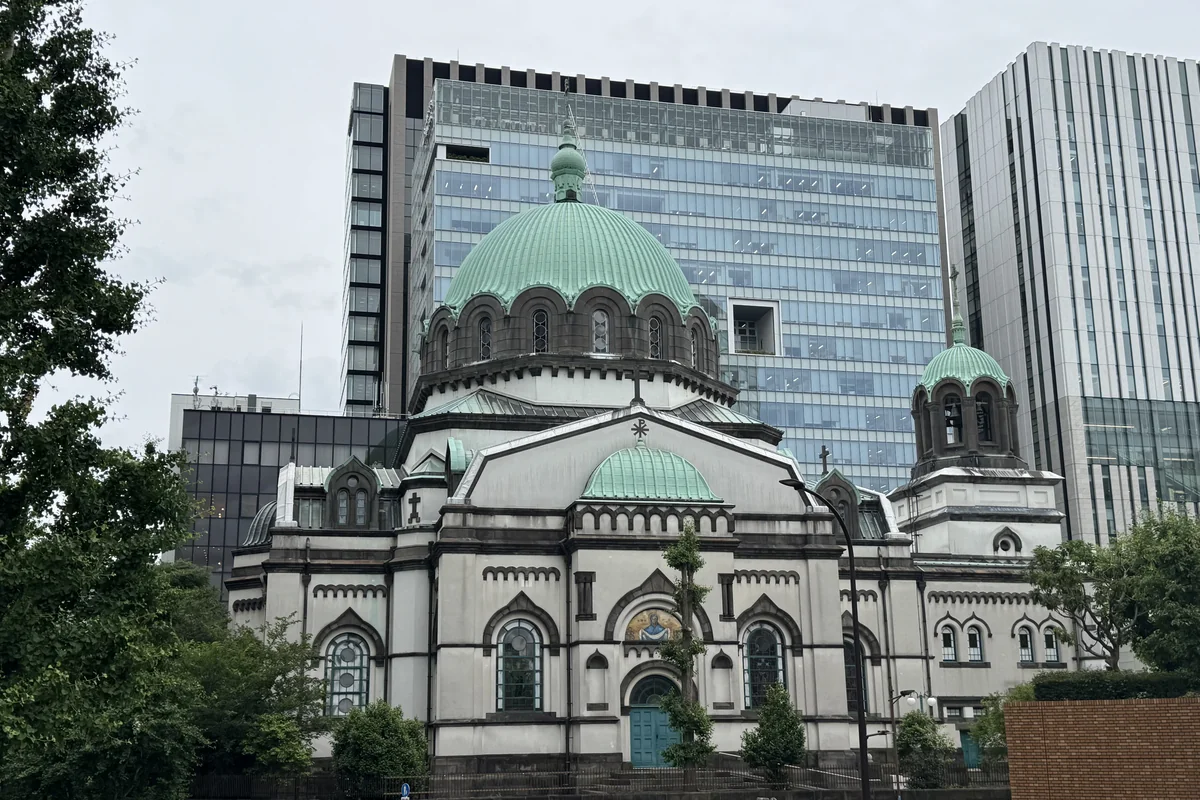
Ochanomizu Nikolai Cathedral — Money & Photo Info
| Item |
Detail |
| Admission |
~¥300 donation (suggested; cash only) |
| Hours |
Tue-Fri 13:00-16:00 / Sat-Sun 13:00-15:30 (seasonal — check official site) |
| Nearest station |
JR Ochanomizu Station, Hijiribashi Exit, 2 min walk / Tokyo Metro Chiyoda Line, Shin-Ochanomizu Exit B1 |
| Photography |
Exterior OK, interior forbidden (be quiet near services even outside) |
| Best shot |
From Hijiribashi Bridge, looking across at the dome with skyscrapers behind (south side of the road) |
It's a single Chiyoda Line stop (Shin-Ochanomizu) between Roppongi Hills and the National Art Center. Adding just 30 minutes to your modern-architecture day reliably gets you one frame that stands out on social.
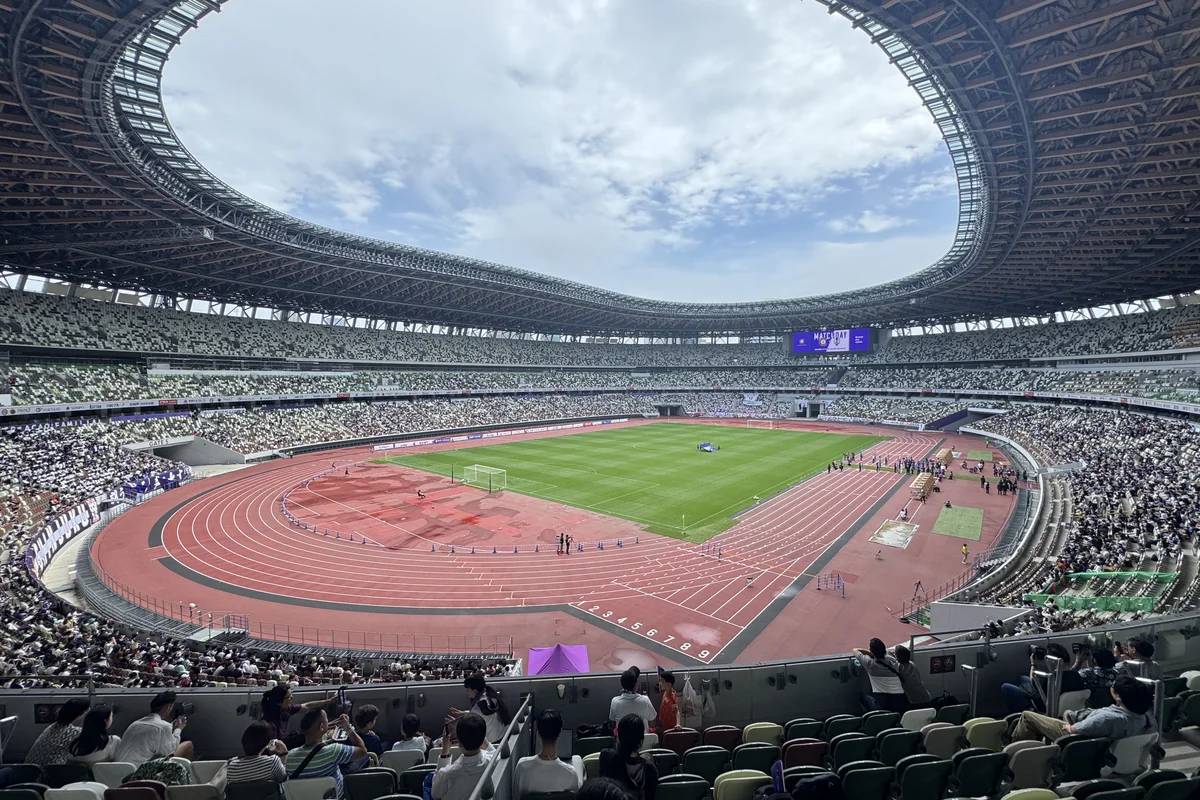
Bonus 2: New National Stadium (Kengo Kuma, Olympic Legacy)
A second must-add detour is the New National Stadium. It was the main venue for the 2020 Tokyo Olympics, designed by Kengo Kuma around a "Stadium in the Forest" concept. Wooden louvers made from cedar harvested in all 47 Japanese prefectures wrap the exterior — the contrast of the timber ring against the running track when viewed from the outer concourse is a shot you can't get anywhere else.
| Item |
Detail |
| Admission |
Event days only (ticketed) — the outer concourse is free to walk anytime |
| Hours |
Check official site for event schedule |
| Nearest station |
JR Sendagaya Station / Toei Oedo Line Kokuritsu-Kyogijo Station Exit A2 (direct) |
| Photography |
Exterior and concourse OK; follow event rules for game-day photography |
| Best shot |
North outer deck looking up at the timber louvers, or from the Shinjuku Gyoen side capturing the stadium with the Shinjuku skyscrapers in one frame |
You can fold this into a Shinjuku-area architecture day via JR Chuo Line, one stop (Shinjuku → Sendagaya) — comes naturally right after the Cocoon Tower visit.
9. Related articles
Update policy for this page: Observation deck and museum prices are reviewed twice a year (May and November). When prices change, we update last_verified and re-check each venue's official site. Always double-check the official sites + Klook / KKday booking pages for the latest information.