THB to JPY in Tokyo: Complete Currency Exchange Guide 2026 — For Thai Travelers
⚡ 30-Second Answer: THB → JPY in Tokyo: Bangkok Super Rich / Vasu Exchange are world-class (rates very close to mid-market). Japan-side acceptance is limited, so buy 90% of yen in Thailand and bring is the rule. Rates are indicative and move daily — check the live rate before you commit (only World Currency Shop is live-tracked here).
Quick Reference
Value
Optimal route
Bangkok Super Rich/Vasu before flight
Tokyo street
Shinjuku-West/Ikebukuro (roughly mid −1% to −2.5%, varies)
Worst
Airport (roughly mid −3% to −6%)
Wise/Revolut
about mid −0.5% + ~¥220 ATM
Last verified
June 2026
✓ Last verified: Sep 2026
📖6 min read
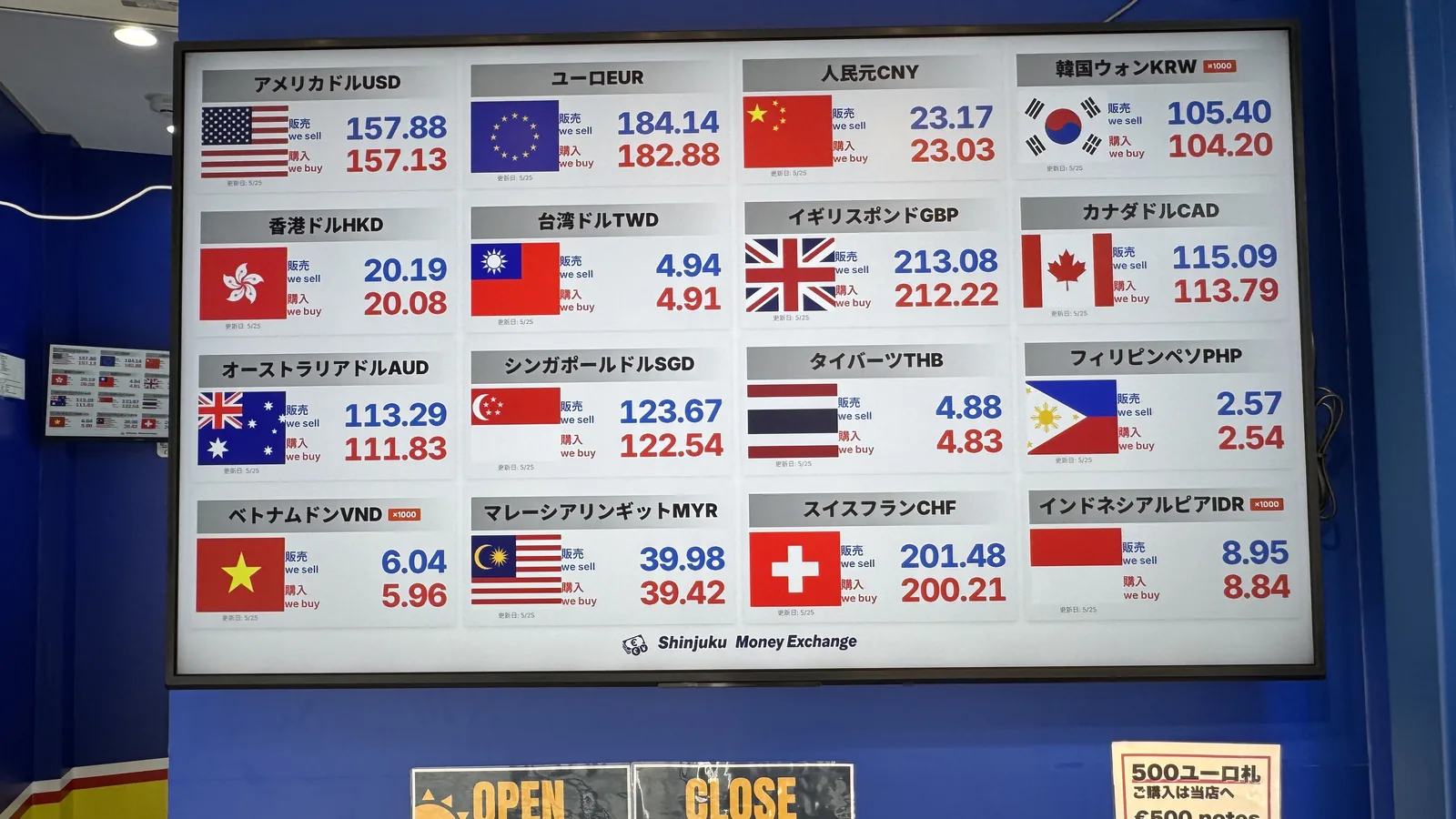
Photo: Yen Finder Editorial, Shinjuku 2026-05-24
SponsoredThis article contains affiliate links. We may earn a commission when you sign up through them, but our recommendations and editorial stance are not influenced by the partnerships.
Contents📖 ~7 min read
For Thai travelers, exchanging Thai baht (฿THB) into Japanese yen works differently from USD or EUR. THB is handled by only a limited number of shops inside Japan, so the smart move is to buy yen in Thailand before you fly. This guide walks through the THB → JPY situation in Tokyo, comparing rates in Thailand vs Japan, THB-friendly shops in Tokyo, and alternative options in one place.
TL;DR — Quick Answer for THB Travelers in Tokyo
Amount
Recommended method
Why
Up to ฿1,000 (small)
Buy yen at a Bangkok exchange shop
Best rate, prep before departure
฿1,000–10,000 (about one week in Tokyo)
Buy 90% of your yen in Bangkok + top up at a Tokyo street shop if needed
Pre-trip prep wins by a wide margin
Over ฿10,000 (longer stay)
Thai-issued credit card + UnionPay debit at ATMs
Lowest cost per transaction
💡 Yen reference: A 5% rate gap on ฿3,000 = roughly ¥600 lost (at about 1 THB ≈ ¥4.5). That's about one bowl of ramen in Tokyo.
Comparison ① Thailand vs Tokyo — Where Should You Buy Yen?
Location
THB → JPY rate (typical, indicative)
Major Bangkok exchange shops (Super Rich, Vasu, Siam Exchange)
Very close to mid-market (best)
Major Thai banks (Bangkok Bank, KBank, SCB)
A little below mid-market
Suvarnabhumi Airport (BKK)
Noticeably below mid-market
Tokyo street shops (Shinjuku-West / Ikebukuro)
Roughly mid −1% to −2.5%
Tokyo airport counters
Roughly mid −3% to −6%
Super Rich and Vasu Exchange in Bangkok are among the most competitive exchange shops in the world, offering yen at rates very close to the mid-market rate. The rule of thumb is simple: buy 90% of your yen in Bangkok before you fly. Rates move daily, so check the live rate before exchanging.
Comparison ② THB Exchange Spots in Tokyo
THB is not widely handled at Japanese exchange counters. The reliable areas are:
Area
Representative shops
Handles THB
Rate competitiveness
Shinjuku-West
World Currency Shop, etc.
✅
🟡 Roughly mid −1% to −2.5%
Ikebukuro
Chinese / Southeast Asian exchange shops
✅
🟢 Among the most competitive in Tokyo
Ueno / Okachimachi
Asian exchange shops
🟡 Some shops
🟡 Roughly mid −1% to −2.5%
Haneda Airport (HND)
Major exchange operators
✅
🔴 Roughly mid −3% to −6%
Narita Airport (NRT)
Major exchange operators
✅
🔴 Roughly mid −3% to −6%
Ikebukuro is the most THB-competitive area in Tokyo. Even so, buying in Bangkok still beats Tokyo by a clear margin. Rates are indicative and vary by shop and day — confirm at the counter.
Comparison ③ Thai-Issued Cards and Cashless Payments
Thai credit cards (Visa / Mastercard / JCB / UnionPay) work at most places in Japan:
Store category
Accepted?
Major department stores, convenience stores, chains
✅
UnionPay-compatible ATMs (Seven Bank, Lawson Bank)
✅ (UnionPay cards only)
Street food stalls, small independent shops
🔴 Limited
Watch out for DCC (Dynamic Currency Conversion): if the register asks "Pay in THB?" and you say Yes → you lose 3–7%. Always choose JPY billing.
Comparison ④ Which kind of THB traveler are you?
Pick the row that matches you, then use the comparisons above for the details.
If you're...
Best THB move for Tokyo
Why
Changing ฿10,000+ for a longer trip
Buy 90% of your yen at Bangkok Super Rich / Vasu before flying
Bangkok is world-class (very close to mid); Tokyo can't match it
A budget traveler pulling small amounts
A UnionPay debit card at a 7-Eleven Seven Bank ATM
Near mid (about mid −0.5%), 24/7, ~¥220/withdrawal
Just landed with no yen
Change only ~¥10,000 at the airport, top up later
Airport is roughly mid −3% to −6%; cap it and finish in the city
Already in Tokyo and short on cash
An Ikebukuro West-side Asian exchange shop
Most THB-competitive area in Tokyo
Holding a 0%-FX Thai credit card
Tap to pay and always choose JPY (never DCC)
DCC costs 3–7%; you barely need cash
3 Common Mistakes Travelers Make
Exchanging the full amount at BKK airport or NRT. On ฿3,000 that's roughly ¥1,200–2,000 lost.Buy in advance at Super Rich or Vasu — that's the rule.
Paying in THB via DCC. When a convenience store asks "Pay in THB?" and you say Yes → 3–7% lost. Always JPY.
Expecting cashless payment at small shops. Street stalls and small independents are often cash-only. Keep ¥15,000–20,000 in cash on hand.
A: Yes. Super Rich is known as one of the most competitive exchange shops in the world, offering rates very close to the mid-market rate. The Sukhumvit and Siam branches are the most popular. Always check Super Rich before you fly to Japan.
Q: How much yen can I buy in Thailand?
A: Under Thai rules, you can generally take out the equivalent of USD $10,000 per day. A trip-sized amount of ¥1,000,000 per person is well within limits. If you cross the declaration threshold (over $10,000) at the airport, check requirements in advance.
Q: Can I use a Thai bank card in Japan?
A: Thai cards with a Visa, Mastercard, JCB, or UnionPay logo are widely accepted in Japan. UnionPay cards can withdraw yen at Seven Bank and Lawson Bank ATMs.
Q: What should I do with leftover yen?
A: Thai travelers tend to return to Japan often, so the most efficient option is to keep leftover yen for your next trip. If you'd rather not hold cash, Pocket Change at the airport lets you convert leftover yen into Suica or Amazon gift codes.
Q: How do I find THB-handling shops in Ikebukuro?
A: Look around the west side, where Chinese and Southeast Asian exchange shops cluster. Several display a "Thai Baht accepted" sign out front. Calling ahead to confirm the rate before you go is a safe bet.
Q: Does TrueMoney work in Japan?
A: No. TrueMoney is a Thailand-only e-wallet with no acceptance network in Japan. Don't count on it for in-Japan spending — bring a Visa/Mastercard/JCB card or a Wise/Revolut card instead.
Q: What about Thai-issued JCB cards specifically?
A: JCB cards issued in Thailand work like any other JCB in Japan — Japan is JCB's home market, so acceptance is broad, including many smaller shops and restaurants that reject other foreign-issued cards.
Q: Can I exchange leftover yen back to THB at a Thai airport?
A: Yes, but it costs you — expect another few percent off at Suvarnabhumi or Don Mueang counters. If you're a repeat visitor, it's usually cheaper to just keep the yen for next time (see the leftover-yen answer above).
About: Yen Finder Editorial / Photographed 2026-05-24 / Last verified 2026-06-03. Rates and shop information are based on each operator's published details. Always confirm the final rate at the counter.