Kyoto Station money guide 2026: arrival hub strategy, exchange options inside the station, and the Kyoto cash reality
⚡ 30-Second Answer: Kyoto Station = Kansai's biggest hub, with 92% card acceptance. Exchange: Travelex in Kyoto Sta. underground (mid -3%) or Mizuho Bank inside JR Kyoto Sta. (mid -2.5%, weekday), 24h ATM: 7-Eleven in front of Kyoto Sta.¥15,000-25,000 cash + Wise/Revolut works. For Shinkansen-direct itineraries, you can complete everything inside the station.
Quick Reference
Value
Weekday best
Mizuho inside JR Kyoto Sta. (-2.5%)
24h exchange
Travelex underground (-3%)
24h ATM
7-Eleven front of Kyoto Sta.
Cash needed
¥15,000-25,000
Card acceptance
92%
Last verified
June 2026
✓ Last verified: May 2026
📖6 min read
SponsoredThis article contains affiliate links. We may earn a commission when you sign up through them, but our recommendations and editorial stance are not influenced by the partnerships.
Kyoto Station handles ~190,000 daily passengers and is the primary arrival point for tourists heading to Gion, Arashiyama, Fushimi-Inari, and Kiyomizu. Unlike Tokyo Station, where exchange happens spread across many districts, Kyoto's currency exchange flow concentrates at the station itself — three dedicated counters inside or immediately adjacent (Travelex, WCS, Smart Exchange) handle most foreign-cash inflow for the city. The station's payment culture is card-friendly (Isetan Kyoto, Yodobashi Camera, modern food halls), but the traditional Kyoto experience — Higashiyama temples, Gion machiya cafés, family-run kaiseki — runs cash-heavy. Plan ¥30,000–¥50,000 cash per person for a typical 2–3 day Kyoto trip, exchanged at the station on arrival.
TL;DR
Bring: ¥30,000–¥50,000 cash per person for a 2–3 day Kyoto trip
Best exchange inside station: Travelex Kyoto (Hachijo-guchi side), WCS Kyoto Station — both ~1–1.5% below mid-market
24/7 ATMs: 6+ Seven Bank ATMs across station exits, plus Lawson and FamilyMart e-net
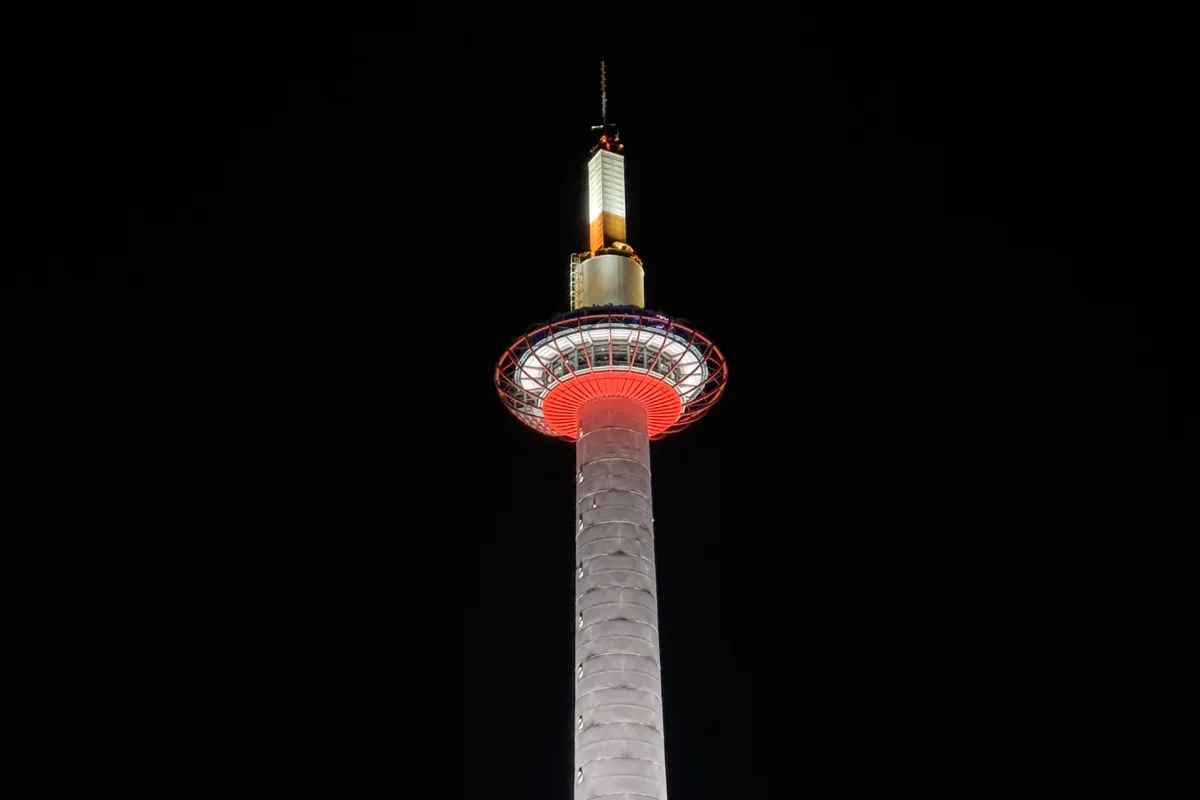
Card-friendly zones: Kyoto Station building, Isetan, Yodobashi, Kyoto Tower, modern Karasuma-dori restaurants
Don't: rely on Higashiyama side ATMs — coverage is thinner than the station area
Why Kyoto Station is the right exchange location
Three structural reasons unique to Kyoto:
1. Arrival concentration
Unlike Tokyo (multiple major terminals + airports + intra-city transfers), virtually every foreign tourist enters Kyoto via Kyoto Station — Shinkansen from Tokyo, JR limited express from Kansai International Airport (Kix), Hankyu/Keihan from Osaka, or local rail. This gives the station enormous bargaining power on exchange volume, sustaining 3 dedicated specialist counters.
2. Travelex airport-equivalent strategic position
Travelex Kyoto (inside the station near Hachijo-guchi south exit) functions as Kyoto's "airport equivalent" — the place every newly-arrived tourist exchanges their first batch of yen. Rates are mid-tier (~1–1.5% below mid-market) but the inventory is deep and the staff English is reliable.
3. Department-store-floor model concentration
Isetan Kyoto (directly inside Kyoto Station building's south side, floors B2–11F) operates a high-floor currency exchange counter as part of its international service zone. This is WCS Kyoto — published rates online, ~1–1.5% below mid, refreshed multiple times daily.
Where to exchange inside / adjacent to the station
Location
Type
Rate (USD)
Hours
Travelex Kyoto Hachijo-guchi
Specialist, 30+ currencies
~1–1.5% below mid
~07:30–22:00
WCS Kyoto / Isetan 11F
Department store counter, published rates online
~1–1.5% below mid
Mall hours
Smart Exchange auto-machines (Kyoto Station building, multiple)
Self-service kiosk
~1.5–2.5% below mid
24/7
Seven Bank ATMs at the 7-Elevens around station
ATM cash withdrawal (Wise/Revolut card route)
~0.5% below mid (effective)
24/7
Hotel front desks (any Kyoto hotel)
Cash exchange to guests
3–5% below mid
Front desk hours
Best rate path inside the station
For amounts $300+: Travelex Kyoto Hachijo-guchi (deep inventory, slight spread improvement over WCS for larger amounts)
For Wise/Revolut users: skip exchange entirely, use 7-Eleven Seven Bank ATM — best effective rate at ~0.5% below mid
For online-rate planners: WCS Kyoto's online rate lets you verify before walking up
Worth knowing
There is no Dollar Ranger branch in Kyoto (the chain is Tokyo-only at last verification)
For absolute-best rate, the alternative is take JR back to Osaka and use a major chain there — but the time cost vastly outweighs the rate improvement for typical tourist amounts
Subscribe to the weekly digest (free, unsubscribe anytime).
Email used for the newsletter only. Never shared.
Last verified: 2026-05-18
Where cash is still needed
Gion district: small machiya restaurants, traditional teahouses, geisha-related experiences — mostly cash
Higashiyama temple area: most temple admission fees (~¥300–¥500 each) are cash. Restaurants in the Sannenzaka/Ninenzaka slopes mostly cash.
Pontocho dining alley: 50–70% cash-preferred for traditional restaurants
Family-run kaiseki: typically cash
Bamboo basket / handicraft shops near Arashiyama: cash
Tea ceremony experiences: usually paid in cash
Taxis to remote temples (Kibune, Kurama, Daihikaku Senkoji): some accept cards, many don't — bring backup cash
Worked example: 3-day Kyoto trip (1 person)
A typical itinerary covering Higashiyama, Arashiyama, and downtown:
Activity
Typical cost
Cash?
Hotel × 3 nights (mid-tier ~¥18,000/night)
¥54,000
Card OK
Temple admissions (8 temples × ~¥400 avg)
¥3,200
Cash
Higashiyama-area lunch (small restaurants)
¥5,000
Mix (cash easier)
Gion teahouse experience
¥4,500
Cash
Arashiyama bamboo grove + Tenryuji temple
¥1,000
Cash
Local family-run kaiseki dinner
¥8,000–¥15,000
Cash
Daily konbini snacks and coffee
¥3,000
Mix
Pontocho-area lunch
¥3,500
Mix (cash easier)
Bus / subway / occasional taxi
¥3,000
IC + some cash
Souvenir shopping (Nishiki Market)
¥5,000
Mix
Cash subtotal
~¥30,000–¥35,000
Buffer (20%)
¥7,000
Total cash to bring
~¥40,000
Total trip spend
~¥80,000–¥100,000
For a temple-focused trip with kaiseki dining, lean toward the higher cash end (¥45,000). For a shopping-focused trip via Isetan and modern restaurants, you can drop to ¥25,000 cash.
The Arashiyama / Higashiyama cash trap
Two specific Kyoto sub-regions where tourists often run short:
Arashiyama
ATM coverage thins beyond the JR Arashiyama station 7-Eleven
Bamboo grove area has no ATM
Small craft shops on the main street are mostly cash
The boat ride down the Hozugawa river (¥4,200) is cash on board
Top up at the station 7-Eleven before walking into the bamboo grove area
Higashiyama (Kiyomizu-dera area)
Sannenzaka/Ninenzaka slopes have minimal ATM coverage
The walking route from Kiyomizu-dera down to Yasaka Shrine is ~30 minutes with limited ATM stops
Temple admission, water purification rituals, omikuji, and the small souvenir shops all want cash
Top up at the Kiyomizu-dori 7-Eleven before starting the temple walk
Practical playbook for Kyoto arrival
Step off the Shinkansen → walk to Travelex Kyoto Hachijo-guchi, exchange your initial yen (¥20,000–¥30,000 minimum) if you have foreign cash
Wise/Revolut card users: skip exchange, walk to the Karasuma-guchi 7-Eleven, withdraw ¥30,000–¥50,000
Top up to ¥40,000+ cash before leaving the station — Kyoto's traditional zones don't have ATM density to support last-minute top-ups
For multi-day trips: plan to re-top-up at the station before each major outing rather than mid-Higashiyama
Common mistakes
① "I'll exchange in Gion"
Gion has no specialist currency exchange. The nearest options are Kyoto Station (15 min by bus) or a major hotel front desk (terrible rate). Plan ahead.
② "Temples accept cards"
Most major temples in Kyoto are cash-only for admission fees. Even Kinkaku-ji's ¥400 entry is cash. Carry ¥1,000s and ¥500 coins.
③ "Card works at every restaurant"
Modern downtown restaurants: yes. Traditional Pontocho/Gion kaiseki, family-run soba in Higashiyama: ~50% cash-preferred. Bring cash for the traditional experience.
④ "I'll top up in Arashiyama"
ATM density beyond the JR station is thin. Top up to your full daily budget before walking into the bamboo grove or boat ride area.
Last verified 2026-05-18. Temple admission fees typically revised in April each fiscal year. Travelex Kyoto inventory deep but rare currencies sometimes require pre-call.