Kyoto cash strategy 2026: where to exchange yen and how much to carry for temples
⚡ 30-Second Answer: Kyoto = sites accept cards but shrines/small shops need cash, with 81% card acceptance (lower than Tokyo's 92%). ¥25,000-35,000 cash + Wise/Revolut card is the playbook. Exchange: WCS Kyoto Karasuma branch is the most reliable, running 0.5-1.0% better than Kyoto Station (Kyoto Station Travelex/bank booths are more convenient but slightly worse), 24h ATM: 7-Eleven in front of Kyoto Sta.Shrine offerings, matcha experiences, small Kiyomizu-area shops need cash — small ¥500-1,000 bills help.
Quick Reference
Value
Best exchange
WCS Kyoto Karasuma (0.5-1.0% better than Kyoto Sta.)
SponsoredThis article contains affiliate links. We may earn a commission when you sign up through them, but our recommendations and editorial stance are not influenced by the partnerships.
Kyoto's tourism mix — temples, family-run ryokan, traditional
restaurants, the historical Nishiki Market — pushes the cash-needed
percentage well above Tokyo's, making ¥30,000–¥50,000 in cash per
person for a 4-day Kyoto trip the right baseline. The best
exchange options cluster around the Karasuma area between
Karasuma-Oike and Shijo, with Kyoto Station providing a slightly
worse but more convenient backup. This guide gives the practical
breakdown by neighborhood, the daily cash budget, and the small
cultural touches that make Kyoto's cash flow smooth.
TL;DR
Carry ¥30,000+ cash for a 4-day Kyoto trip; ¥50,000+ for
ryokan-included or festival-included itineraries.
Best exchange: Karasuma district (between Karasuma-Oike
and Shijo); WCS Kyoto branch and pawn-shop FX windows.
Backup: 7-Eleven Seven Bank ATMs throughout central
Kyoto and at all Shinkansen stations.
Pre-bring cash from Tokyo or Osaka if your itinerary
includes ryokan, kaiseki, or rural Kyoto outskirts.
Why does Kyoto need more cash than Tokyo?
Kyoto's tourist economy combines temple visits, traditional crafts,
and small family-run businesses. Each layer is more
cash-dependent than Tokyo's modern retail:
Temples and shrines
Most temples charge ¥300–¥1,000 admission, cash only at the
gate. Donations (saisen-bako) are entirely cash. Fortune slips
(omikuji) are ¥100–¥300, cash only.
Family-run restaurants
Higher density than Tokyo of small obanzai (Kyoto-style home
cooking) shops, traditional kissaten coffee houses, and 100-year-
old confectioneries — most cash-only.
Traditional ryokan
Kyoto has the highest density of traditional ryokan in Japan;
about 60–70% require cash deposits at check-in.
Nishiki Market
~100 small vendors selling food, sake, pickles, and crafts.
Card acceptance is improving (~50% in 2026) but still
inconsistent stall-to-stall.
Modern retail (where cards work)
Card acceptance in Karasuma, Kyoto Station, and
modernized parts of Gion matches Tokyo: hotels, department
stores, Apple Store, major chains all accept Visa/Mastercard/
JCB.
Worth remembering: for a typical 4-day Kyoto trip
(temples, ryokan, mid-range restaurants), you'll spend 40–50%
of your budget in cash — about double Tokyo's ratio.
What's the right cash budget for a Kyoto trip?
City-only Kyoto (3 days, mid-range hotels)
¥20,000–¥30,000 cash per person
Category
Daily cash
Temple admissions (3–5 per day)
¥1,500–¥3,000
Family restaurants / kissaten
¥2,000–¥3,500
Nishiki Market browsing
¥1,500–¥3,000
Coffee, vending, small shops
¥1,000
Daily total
¥6,000–¥10,500
Times 3 days = ¥18,000–¥31,500. Budget ¥25,000 for buffer.
Ryokan-anchored Kyoto (3 days, including 1 ryokan night)
¥40,000–¥60,000 cash per person
Add the ryokan deposit (typically ¥15,000–¥30,000 cash for one
night). Plus the cash budget above.
Multiple pawn-shop FX windows — variable rates; check
same-day display.
Karasuma rates are typically 0.3–0.6% behind Tokyo's best
on USD/EUR — close enough that a Kyoto-anchored trip doesn't
need Tokyo as a detour.
Kyoto Station
JR Kyoto Travelex — convenient, especially for arriving
Shinkansen travelers; 31-currency menu.
JR ViewCard exchange center — 35 currencies; comparable
to Tokyo's branch but slightly worse rates.
Kyoto Station rates are typically 0.5–1.0% behind Karasuma
— acceptable for the convenience.
Other zones
Gion area — limited exchange shops; rely on cash brought
from Karasuma or 7-Eleven ATMs.
Arashiyama — minimal exchange options; bring cash from
central Kyoto.
How does the Tokyo–Osaka–Kyoto cash strategy work?
For a multi-city itinerary, the practical pattern:
If your route is...
Where to exchange the bulk
Tokyo → Kyoto → Osaka
Tokyo (best rates); top up via 7-Eleven in Kyoto
Osaka → Kyoto → Tokyo
Osaka (close to Tokyo); top up in Kyoto
Kyoto-only (KIX entry)
Karasuma in Kyoto; KIX airport for the first ¥10,000
Tokyo-only with day trip to Kyoto
Tokyo; 7-Eleven in Kyoto for top-ups
Day trip from Tokyo or Osaka: bring ¥10,000–¥15,000 cash from
the hub city. Kyoto's rates lag enough that pre-bringing is the
better choice for amounts >¥20,000.
Subscribe to the weekly digest (free, unsubscribe anytime).
Email used for the newsletter only. Never shared.
Last verified: 2026-08-25
What about Suica IC card in Kyoto?
Suica works on Kyoto's transit (city subway, JR, Hankyu, Keihan,
Eizan, Kyoto Bus, Kyoto City Bus) thanks to the 2020 nationwide
IC integration. ICOCA (the Kansai-region equivalent) also works
in Tokyo and elsewhere.
For Kyoto-anchored trips, Suica or ICOCA both work fine —
either is a good default choice.
Kyoto temples frequently have admission systems that fall outside
typical card acceptance:
Kiyomizu-dera: ¥400 admission, cash-only at the gate
Fushimi Inari: free entry, but ¥300 omikuji and ¥1,000
small fox figurines are cash-only
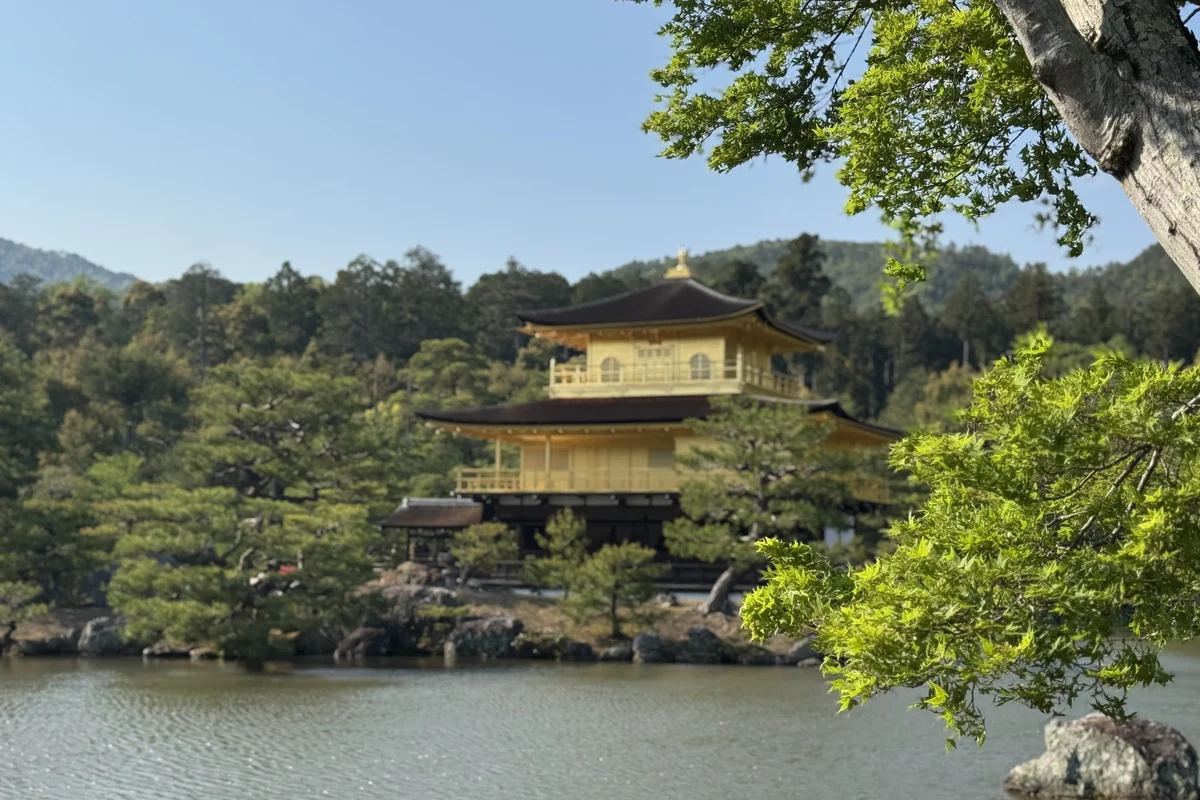
Kinkaku-ji: ¥500 admission, cash-only
Ryoan-ji: ¥500 admission, cash-only
Higashi Hongan-ji and other major temples: same pattern
Total temple admission for a typical 5-temple day: ¥2,500–
¥4,000 cash. Plus donations (typically ¥100 per shrine), small
souvenirs, fortune slips, etc.
What this means for your visit
✅ Carry ¥30,000–¥50,000 cash depending on Kyoto-only
vs ryokan-included.
✅ Exchange in Karasuma for the best Kyoto rates;
Kyoto Station for convenience.
✅ Top up via 7-Eleven Seven Bank ATMs as you spend cash
on temples and small shops.
✅ Bring small denominations (¥1,000 bills, ¥500 coins) for
shrine donations and small purchases.
✅ Use a no-FX-fee card for hotels, mid-range restaurants,
and modern shopping — same rules as elsewhere.
⚠️ Don't expect cards to work at temples — cash-only is
the rule, not the exception.
⚠️ Don't try to exchange at small inns or ryokan — they
may agree but rates are poor.
Frequently asked questions
Are Kyoto rates significantly worse than Tokyo?
About 0.3–0.6% worse on USD/EUR. The gap is small enough that
Kyoto-anchored travelers shouldn't detour to Tokyo just for
exchange. Pre-bringing cash from Tokyo or Osaka if you're
already passing through saves ~0.5%.
Can I use my Suica IC card at temples?
No — temples are cash-only at the entrance gate. The IC card
works on transit to and from temples, plus convenience stores
and vending machines along the way.
What about Kyoto's tea ceremony or kimono experiences?
Most modern tea ceremony providers and kimono rental shops accept
cards — these are tourist-frequent businesses with online
booking. The traditional, family-run versions are cash.
Do Kyoto restaurants accept cards?
Mid-range and chain restaurants in Karasuma, Gion, and Kyoto
Station: ~80% accept cards. Family-run obanzai shops, kaiseki
restaurants away from major streets, and traditional confection-
eries: ~40% accept cards. Carry cash for these.
Is there a way to skip the cash-heavy Kyoto experience?
Partly — staying at a major-chain hotel (Marriott, Hyatt, Hoshino),
eating at modern Karasuma restaurants, and shopping at department
stores can be done mostly card-paid. But the best Kyoto experiences
(temples, traditional ryokan, kaiseki) require cash.
What about Pocket Change at Kyoto Station?
Yes — Pocket Change kiosks at Kyoto Station (and at KIX airport)
let you convert leftover yen to PayPay credit or USD/EUR e-money
on departure day.
What about old or new yen bills?
Both are valid. Some old vending machines and rural shops still
won't accept the new (post-2024) bills; same situation as
elsewhere in Japan.
Check today's real rates on Yen Finder
Open Yen Finder → tap Map → switch to Kyoto in the
area selector. Karasuma, Kyoto Station, and Gion clusters appear
with current rate badges. Sort by "Best Rate" for today's leader;
sort by "Open Now" for late-evening options.