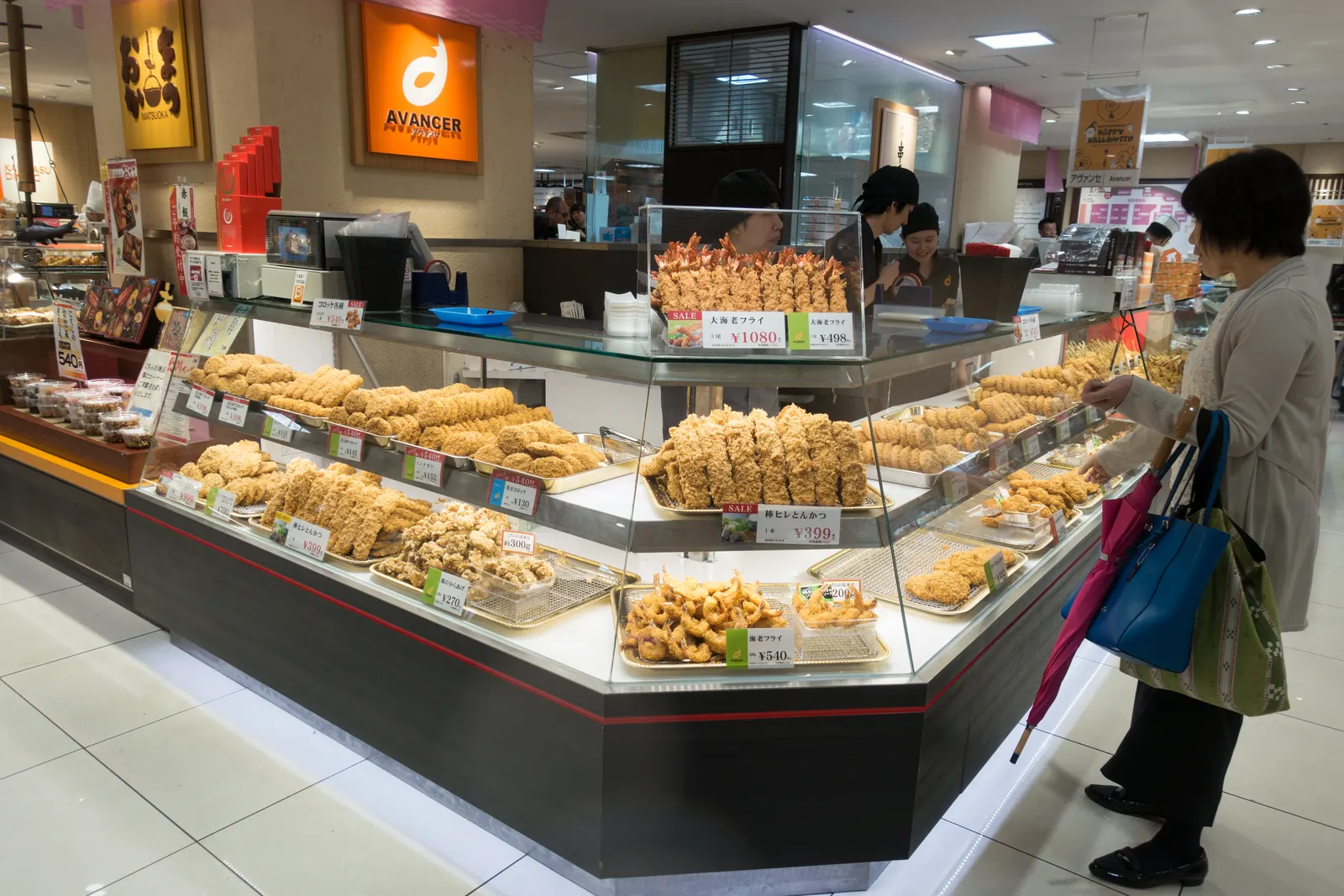
Depachika 2026: Japan's department store food halls, evening half-price strategy, must-try items
⚡ 30-Second Answer: Depachika = dept store basement gourmet paradise (Isetan Shinjuku, Mitsukoshi main, Daimaru Tokyo etc), prepared foods, sweets, bread, alcohol all high quality. ¥500-3,000/item, half-price sales at 5-7pm are tourist gold. 100% card acceptance, ¥5,001+ tax-free. Great for souvenirs (1-3 day shelf life common), shipping service available.
Quick Reference
Value
Price range
¥500-3,000/item
Half-price sale
5-7pm
Card acceptance
100%
Tax-free
¥5,001+
Shelf life
1-3 days
Last verified
June 2026
📖7 min read
Photo: Kent Wang / Wikimedia Commons (CC BY-SA 2.0)
SponsoredThis article contains affiliate links. We may earn a commission when you sign up through them, but our recommendations and editorial stance are not influenced by the partnerships.
Contents📖 ~8 min read
Depachika (デパ地下, "department-store basement") is Japan's best-kept tourist food secret — the basement levels of major department stores (Mitsukoshi, Isetan, Takashimaya, Hankyu, etc.) are gourmet food halls packed with prepared meals, premium wagashi (Japanese sweets), beautiful bento, sushi, sashimi, freshly-fried tonkatsu, intricate Japanese pickles, and dessert galleries. The killer hack: after 19:00-20:00, perishable items get 30-50% discount stickers (半額シール / handnsei shīru) as stores prepare to close — locals time their visits accordingly. Cost ranges: ¥500 for a small sushi pack to ¥10,000 for premium kaiseki bento. Tax-free: only for ¥5,000+ purchases at certified retailers (¥5,000 threshold rarely hit for typical depachika visit, but applies for premium gifts).
TL;DR
What: department store basements (Mitsukoshi, Isetan, Takashimaya, Hankyu, etc.) = gourmet food halls
Evening discounts: 30-50% off perishable items after ~19:00-20:00 daily (varies by store)
Payment: cash + IC + credit card all standard; tax-free for ¥5,000+ same-day same-store
Best for: tourists wanting "premium quality affordable Japanese food" without restaurant prices
Tokyo Hot Picks: Isetan Shinjuku, Mitsukoshi Ginza, Takashimaya Nihonbashi
What depachika actually is
In the 1920s-1930s, Japanese department stores started carrying fresh food on their basement levels — a way to attract daily-shopper traffic to the multi-floor stores. Over decades this evolved into the modern depachika: 2-3 basement floors of premium prepared foods, fresh produce, wagashi (traditional Japanese sweets), bento, sushi, sashimi, baked goods, imported gourmet, alcohol, and chocolate.
The result is the most-impressive food shopping environment in Japan, often beating standalone supermarkets and rivaling Michelin-starred restaurants on prep quality.
Why this matters for tourists
For a foreign tourist, depachika offers:
Premium-quality prepared meals at supermarket prices
Beautiful presentation (ideal for hotel-room dining or picnic)
Variety: 50+ stalls in major depachika, dozens of food categories
No queueing at restaurants — you're served immediately
Cultural immersion: watching Japanese workers and homemakers shop for dinner
The major Tokyo depachika
Isetan Shinjuku (伊勢丹新宿)
Location: Shinjuku Sanchome (5-min walk from JR Shinjuku east exit)
Size: 2 basement floors, ~150 food stalls
Strengths: largest selection in Tokyo, premium positioning, beautiful presentation
Famous for: depachika bento, ekiben (station bento), wagashi
Hours: 10:30-20:00 typically
Mitsukoshi Ginza (三越銀座本店)
Location: Ginza (5-min walk from JR Yurakucho or Tokyo Metro Ginza station)
Size: 1 large basement floor, ~120 stalls
Strengths: high-end gourmet, beautiful presentation, more emphasis on traditional Japanese
Famous for: high-end sushi packs, premium wagashi, dessert galleries
Hours: 10:30-20:00
Takashimaya Nihonbashi (高島屋日本橋本店)
Location: Nihonbashi (5-min walk from Tokyo Station east exit)
Size: 1 large basement floor, ~100 stalls
Strengths: traditional Japanese flavors, premium wagashi
Hours: 10:30-19:30
Hankyu Umeda (阪急梅田本店) — Osaka
Location: Osaka Umeda (right at Hankyu Umeda station)
Size: 2 basement floors, ~150 stalls
Strengths: Osaka local specialties, takoyaki, bento, regional sweets
Hours: 10:00-20:00
Other notable
Daimaru Tokyo: Tokyo Station building, accessible without leaving the station
Seibu Ikebukuro: large depachika, less famous internationally
Sogo Yokohama: a destination depachika in Yokohama
What's actually in a depachika
Floor map (typical)
A major depachika basement is laid out roughly as:
Entrance area: convenience samples (mochi, dorayaki, small sweets)
Fresh produce: high-quality fruit and vegetables (¥1,500 melons, ¥200 carrots)
Almost every stall offers free samples to passing customers. This is genuine — the staff actively want you to taste. For tourists, this is one of the cheapest, most-fun food activities in Tokyo: walking through depachika sampling 20+ different items in 30 minutes.
Must-try items
Tier 1: cult favorites
Item
Approx. price
What it is
Depachika bento
¥800-¥2,500
Premium ekiben-style box with multiple compartments
Sushi pack
¥600-¥1,500
Pre-made sushi, 6-12 pieces
Sashimi pack
¥800-¥2,000
Fresh sliced fish + soy sauce + wasabi packets
Tonkatsu
¥600-¥1,500
Fried pork cutlet on rice with sauce
Karaage
¥250-¥600
Fried chicken pieces
Premium wagashi
¥200-¥500 each
Traditional Japanese confections
Daifuku / mochi
¥150-¥400
Sticky rice cakes filled with red bean or fruit
Cake / dessert
¥350-¥800
Mille-feuille, mochi cake, mousse
Pâté / charcuterie
¥500-¥1,500
Imported / Japanese gourmet meat products
Tier 2: depachika-only specialties
Item
Approx. price
What it is
Cube-shaped melon / fruit pack
¥800-¥3,000
Premium Japanese fruit as gift
Premium pickles
¥500-¥1,500
Yatara-zuke, takuan, etc.
Onigirazu / ekiben
¥600-¥1,200
Larger rice-and-protein meal
Imported foods
¥1,000-¥5,000
Spanish jamón, French cheese, Italian truffles
Wagyu beef (uncooked)
¥5,000-¥30,000+/100g
Premium-grade Japanese beef for home cooking
Tier 3: specialty hand-made stalls
These are often the most photogenic, often Instagram-worthy:
Matcha softserve ice cream
Strawberry daifuku
Dorayaki (red-bean pancakes) by famous makers
Premium mochi varieties (zenzai, anko-dama, etc.)
The evening half-price (handnsei) strategy
The single most-Japanese hack:
How it works
Around 19:00-20:00 daily, depachika stalls start adding "半額" (handnsei, "half price") stickers to perishable items they want to clear before closing:
The depachika bento (¥1,500-¥2,500 originally) at 50% off (¥750-¥1,250) is the best Tokyo dinner deal — restaurant-quality food for konbini-bento prices.
Cultural note
Watching local women time their visits to the discount window is a sociology lesson. Some travel from far suburbs specifically for the 19:00-20:00 deals. Don't feel bad joining — it's the smart way to depachika.
What about morning visits?
Yes — depachika is busy throughout the day. Morning:
Fresh items first (no items yet discounted)
Less crowded than evening
Better selection of premium items not yet sold out
Late morning (10:30-12:00) is the recommended quiet-but-still-stocked window.
Payment
Cash
Always works, especially at small stalls.
Credit card
Standard at most stalls in major depachika.
IC card / PayPay / Apple Pay
Increasingly common, but varies by stall. Bring ¥1,000 cash backup.
Tax-free
¥5,000+ same-day same-store: yes, eligible. Many depachika visits are under this threshold — only premium gift baskets / large hauls hit it.
⚠️ Important (Japanese law): when food and other "consumables" are bought tax-free, they must be sealed in a special bag and taken out of Japan without being opened or eaten here. Buying a bento, sashimi or sozai tax-free to eat at your hotel, in a park or on the train is illegal (tax evasion). Tax-free is only for take-home souvenirs you'll carry abroad — boxed wagashi, matcha, sealed snacks. Anything you'll eat here, just buy tax-included as normal.
Bringing depachika food home
Hotel room dining
This is the killer use case. Buy:
1 sushi pack (¥800)
1 sashimi pack (¥1,500 — get the 50% sticker)
1 dessert (¥350)
1 drink (¥200 from konbini)
Total: ¥2,850 for a restaurant-quality dinner in your hotel room with no reservations.
Picnic dining
Bento + soup at a park (Shinjuku Gyoen, Ueno Park, Hibiya Park)
¥1,200-¥2,000 total per person
Train rides
Buy ekiben (station bento) — same concept as depachika but specifically at train stations
Premium versions ¥1,200-¥2,000
Common mistakes
① "Depachika is for shopping, not for tourists"
False. Eating depachika food is a top tourist experience. Many local food experts genuinely consider depachika food superior to most restaurants in the same price range.
② "I'll go at 9:30 PM for discounts"
Too late — most stalls close by 20:00-20:30 in Tokyo. The 19:00-19:45 window is optimal.
③ "I'll only buy from foreign brands"
Skip the foreign brands and go for traditional Japanese specialties — wagashi, sushi, sashimi, depachika bento. The local stuff is the experience.
④ "Free samples are a one-time courtesy"
Locals sample multiple stalls throughout the day. As long as you're respectful (not blocking stalls, not taking 5 samples at once), it's culturally fine.
⑤ "I'll bring my own bags"
Depachika provides quality paper/plastic bags. The bags themselves are often beautiful — depachika packaging is part of the aesthetic.
Practical playbook for first-time visitors
Visit early afternoon (14:00-16:00) for premium-stocked, less-crowded shopping
Return at 19:00 for evening discount stickers
Sample widely — free tastings are part of the culture
Bring: ¥3,000-¥5,000 cash + IC card
Pace yourself — depachika is overwhelming; take 60-90 minutes
Pay stall by stall: unlike a supermarket, depachika counters each have their own register — you pay at the individual shop (booth), not one central checkout
Tax-free: only if ¥5,000+ at one stall (typically only for premium gift purchases). Note: food you'll eat in Japan is NOT tax-free eligible (see the warning above)